
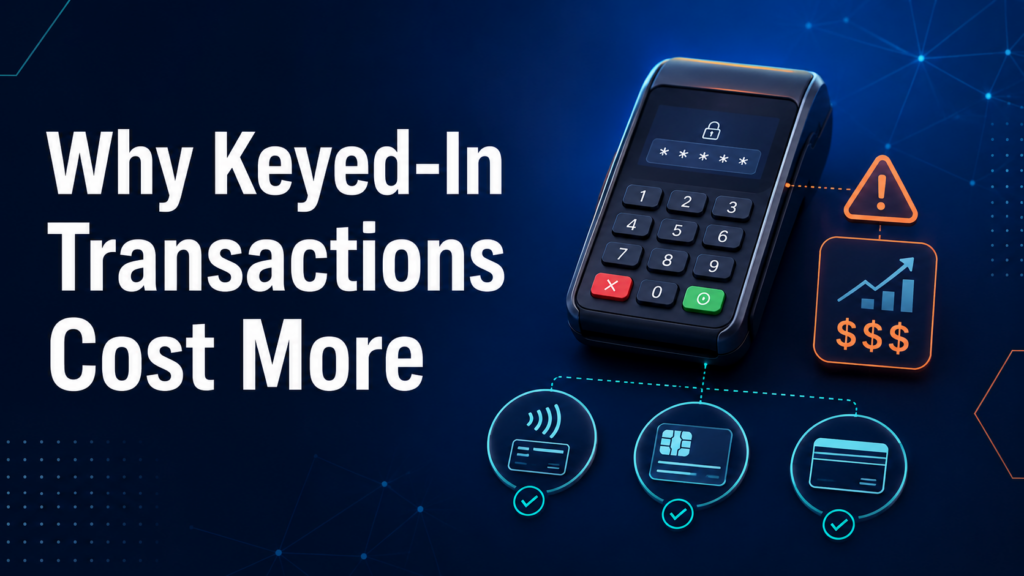
Typing a card number into a terminal may feel like a small change, but the payment system sees a different kind of transaction. When the physical card is not read by a chip, contactless antenna, or magnetic stripe, there is less evidence that the card was actually present. That extra uncertainty often means higher interchange costs and greater fraud exposure.
Why it matters
Chip and contactless payments create dynamic transaction data that is difficult to reuse. A keyed transaction relies mainly on information printed on the card or supplied by the customer. If those details were stolen, the terminal cannot tell whether the person entering them has the genuine card.
Where problems begin
That does not mean manually entered payments are improper. Contractors, medical offices, wholesalers, and service businesses may legitimately accept orders by phone. The important step is to process them through the right channel. A virtual terminal can capture billing information, invoice details, AVS results, and card-security-code responses more cleanly than typing every sale into a countertop device.
What merchants can do
Merchants should train employees not to key a payment simply because a damaged chip card will not read. Follow the terminal prompts, try contactless when available, and use approved fallback procedures. For remote sales, confirm the customer’s identity, keep clear order records, use fraud controls, and never write full card numbers on paper.
A practical next step
Review your statements to see how much volume is being keyed and why. A high percentage may point to broken equipment, weak staff habits, or a sales process that needs a better remote-payment option. Reducing unnecessary keyed entries can lower risk, improve dispute evidence, and sometimes reduce processing expense without changing providers.
There is also a customer-service benefit. Tap and chip payments are usually faster than reading numbers aloud, and customers keep possession of the card. If remote payments are common, send a hosted payment link when practical. It reduces handling of sensitive information and gives the buyer a familiar checkout screen.
Stay prepared. Review it regularly. Keep the process documented. Clear records make follow-up much easier. Ask questions before changing important account settings. Check the agreement because provider rules and timelines vary.