
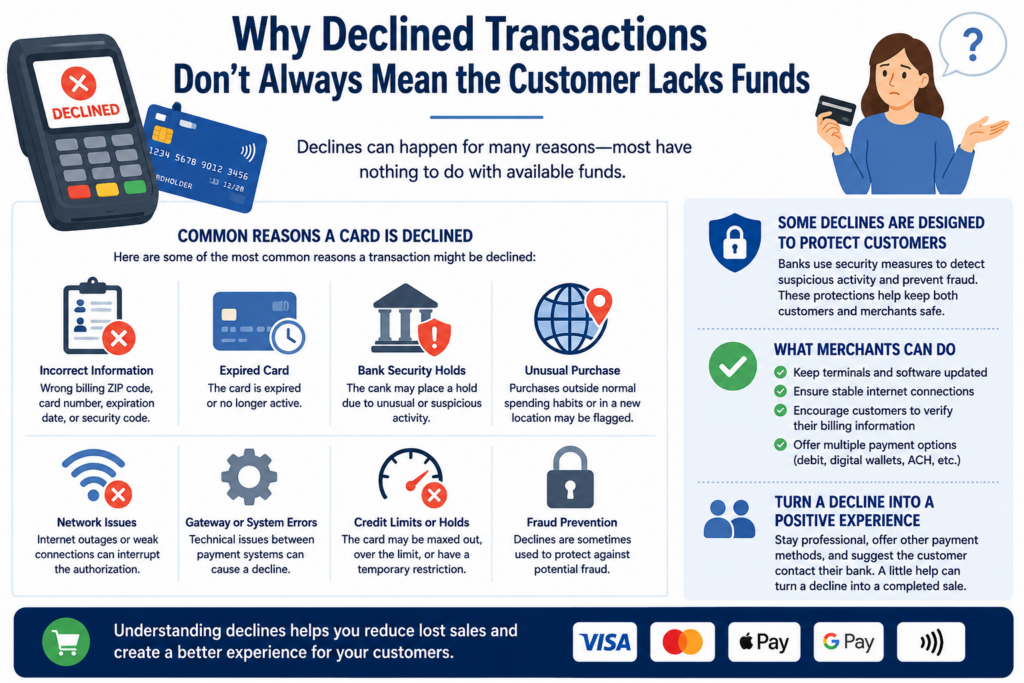
There are few things as uncomfortable as informing a client that their credit card was denied. Most will think that this happens because the customer does not have enough balance on his or her account; however, this is not necessarily true.
There are many factors that may lead to this happening, and most of them are unrelated to money at all. Learning why this occurs may be very useful for businesspeople.
Common Reasons a Card Is Declined
Each transaction is analyzed by banks and card issuers instantly. In case there are any irregularities, the transaction will be declined as a preventive measure.
It may happen that the user has input a wrong billing zip code, an incorrect security code, or a card that has expired. It is possible that the bank has noticed unusual activities regarding the amount of money spent recently and has put a temporary hold on the account.
It may also occur due to such simple reasons as connection problems within the network, issues with payment gateways, or lack of communication between financial institutions.
Some Declines Are Designed to Protect Customers
The financial organizations always keep a watch on any suspicious transactions. The transaction will not be accepted by the bank when the card is used at an unusual location or amount or right after many attempts of failed transactions.
Though it might irritate the consumer, it helps in protecting the customer from fraud transactions.
What Merchants Can Do
While merchants cannot control every decline decision, they can improve the chances of successful payments.
Ensure payment terminals and software remain updated, verify that internet connections are stable, and encourage customers to double-check their billing information when entering card details online. Offering multiple payment options, including debit cards, digital wallets, ACH, or contactless payments, also gives customers alternative ways to complete their purchase.
Turn a Decline Into a Positive Experience
An unsuccessful transaction is not always an indicator that the customer will never make a purchase. Teach your employees how to deal with the situation and not to speculate on the financial condition of the client. It usually takes only a minute for your employees to offer the customer another payment option or to call their bank.
When you are aware of the different reasons behind the decline of payment, you can minimize the frustration of your customers and improve the success rate of your transactions. Some cases do not have anything to do with the customer’s finances; it just happens as intended by design.