
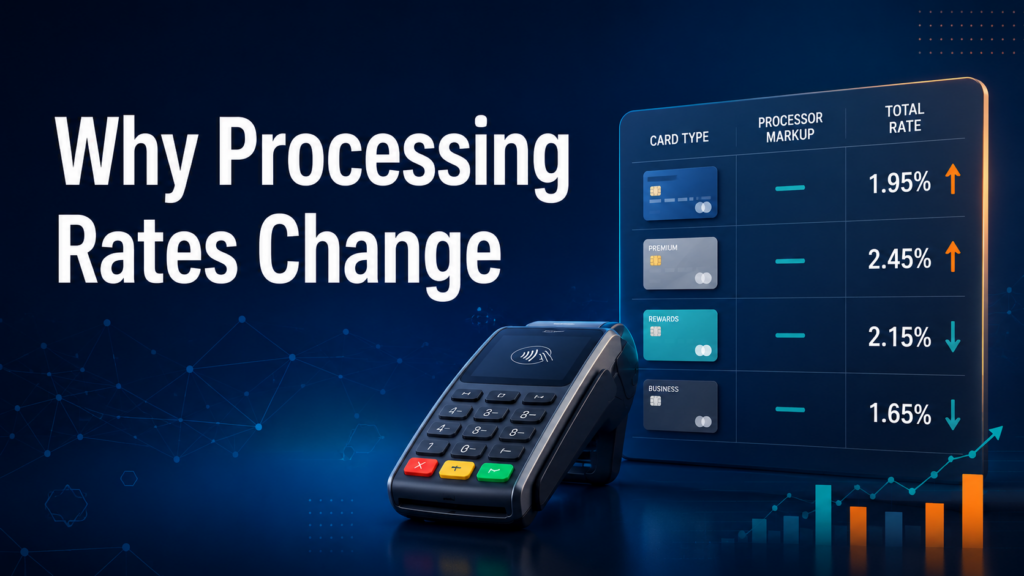
When the effective cost of accepting cards rises, many merchants assume their processor increased its margin. Sometimes that happens, but not always. A processing bill combines several layers, including card-issuing bank interchange, card-network assessments, processor pricing, and other account charges. The mix can change even when the processor’s stated markup stays exactly the same.
Why it matters
Card type is one common reason. Premium rewards and commercial cards may carry different interchange costs than basic consumer debit cards. How the card is accepted also matters. A contactless or chip transaction with complete data may qualify differently from a manually keyed sale or an online payment because the fraud risk is not the same.
Where problems begin
Your own sales mix can shift the average. Imagine a shop that processes more corporate cards during conference season or moves a larger share of orders online. Its total processing expense may increase even though monthly sales and processor markup appear stable. Refunds, small-ticket transactions, international cards, and incomplete transaction data can create additional differences.
What merchants can do
Card networks also update published interchange programs and assessments. Merchants cannot evaluate a statement by looking only at an advertised rate. Divide total processing costs by total card volume to find the effective rate, then compare several months. Look separately at interchange, assessments, processor charges, and one-time fees.
A practical next step
Ask for an explanation when a category changes sharply or a new fee appears. A good statement review should connect the change to actual card mix, acceptance method, data quality, or contract terms. That approach is more useful than chasing one low headline rate, because it shows what the business can control and what comes from the wider card-payment system.
A month-to-month comparison should use the same definition of total cost. Removing annual fees from one month but leaving them in another creates a misleading result. Note unusual sales events beside the numbers. That context helps an owner distinguish a real pricing change from a temporary shift in the customers and cards accepted.
Stay prepared. Keep the process documented. Train staff before problems appear. Clear records make follow-up much easier. Ask questions before changing important account settings.