
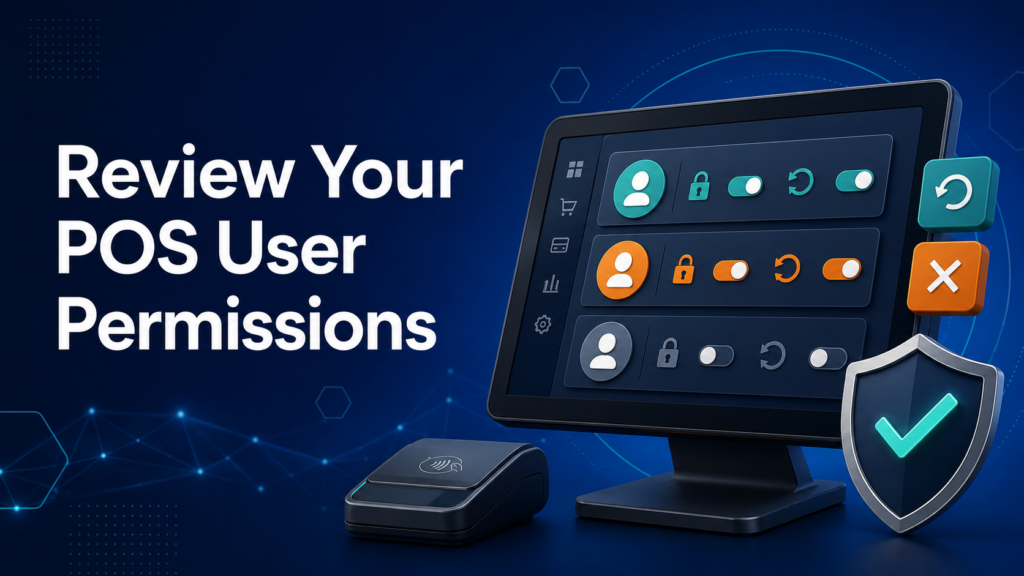
A point-of-sale login should tell the system who is performing an action and what that person is allowed to do. When an entire staff shares one manager code, that control disappears. Refunds, voids, discounts, cash-drawer openings, and report access all look as though they came from the same user.
Why it matters
Permissions reduce both fraud and honest mistakes. A cashier may need to take payments and reprint receipts but not issue a large refund. A shift leader might approve discounts within a set range, while an owner can change tax settings, export reports, or add bank information. Access should match job responsibilities.
Where problems begin
Start by listing sensitive actions in the POS. Common examples include refunds without a receipt, post-sale tip changes, price overrides, deleted orders, gift-card activation, employee scheduling, customer-data exports, and permission changes. Decide which roles genuinely need each capability instead of granting manager access for convenience.
What merchants can do
Every employee should use an individual login, PIN, badge, or supported sign-in method. Remove access promptly when someone leaves or changes roles. Review audit logs for unusual activity and require a second approval for high-risk actions when the system supports it. Owners should also protect their own credentials with strong passwords and multifactor authentication.
A practical next step
Schedule a permission review at least a few times each year and after staffing changes. Compare active users with the current employee roster, test each role, and document who approved exceptions. The goal is not to make routine work frustrating. It is to keep everyday access simple while placing a clear checkpoint around actions that can move money, expose customer information, or change the business’s financial records.
Reports are only useful when someone reads them. A weekly exception report can highlight refunds, no-sale drawer openings, unusually large discounts, and activity outside scheduled hours. Investigate patterns fairly and preserve context; one unusual action may have a reasonable explanation. The purpose is accountability and early detection, not automatic accusation.
Review it regularly. Keep the process documented. Train staff before problems appear. Clear records make follow-up much easier. Ask questions before changing important account settings. Check the agreement because provider rules and timelines vary.
SEO focus: why businesses should review user permissions inside their pos system