
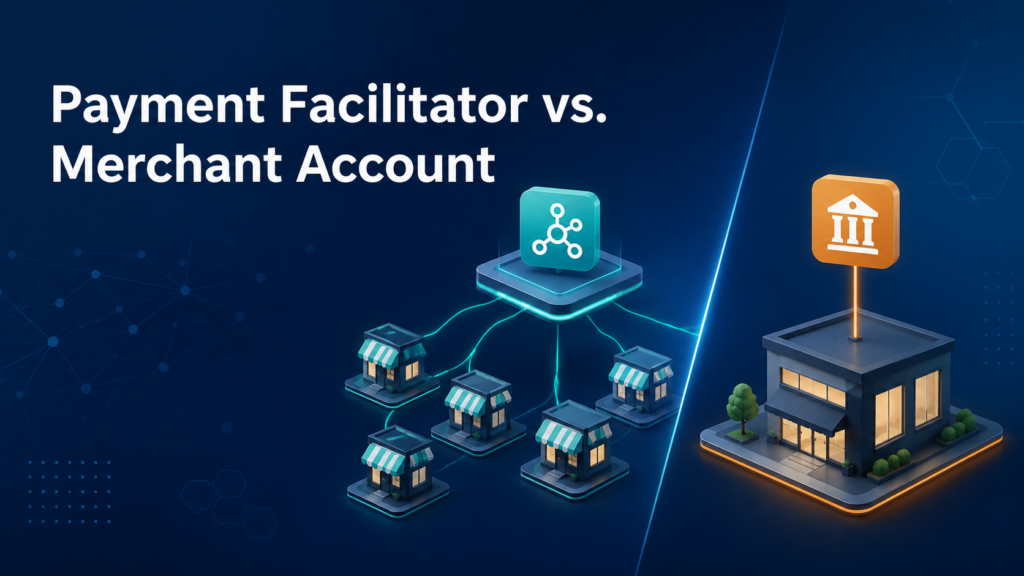
Two businesses can accept cards through similar-looking apps while operating under very different account structures. One may be enrolled as a submerchant under a payment facilitator, often called a PayFac. The other may have a traditional merchant account with its own direct acquiring relationship. The difference can affect onboarding, support, pricing, funding, and account control.
Why it matters
A payment facilitator maintains a master relationship with an acquiring bank and enrolls many smaller sellers beneath it. This model can make signup fast and simple. Standardized pricing and software are usually bundled together, which is convenient for new businesses, occasional sellers, and platforms that need to onboard many participants.
Where problems begin
A traditional merchant account is underwritten for the individual business. The application may request ownership details, bank statements, processing history, average ticket size, policies, and sales information. The process can take longer, but the setup may offer more tailored pricing, equipment choices, limits, and support for a business with established volume or unusual needs.
What merchants can do
Neither model is automatically better. A PayFac may be ideal when speed and simplicity matter more than customization. A traditional account may fit a growing merchant that wants negotiated pricing, multiple locations, specialized integrations, or clearer control over processing parameters. Both models still monitor fraud, disputes, and activity that falls outside the stated business profile.
A practical next step
Before choosing, ask who holds the merchant relationship, how funds are settled, what triggers a reserve or account review, and whether data or recurring payment credentials can move if you leave. Also compare the full cost at your expected volume. Knowing which model you use makes it easier to judge the tradeoffs instead of choosing only by the appearance of the checkout screen.
Consider the exit process before signing up. Ask whether you can export customer profiles, invoices, and subscription records in a usable format. Payment credentials may not always be portable for security and network reasons. A system that is easy to enter but difficult to leave can become costly once the business depends on it.
Review it regularly. Keep the process documented. Train staff before problems appear. Ask questions before changing important account settings.