
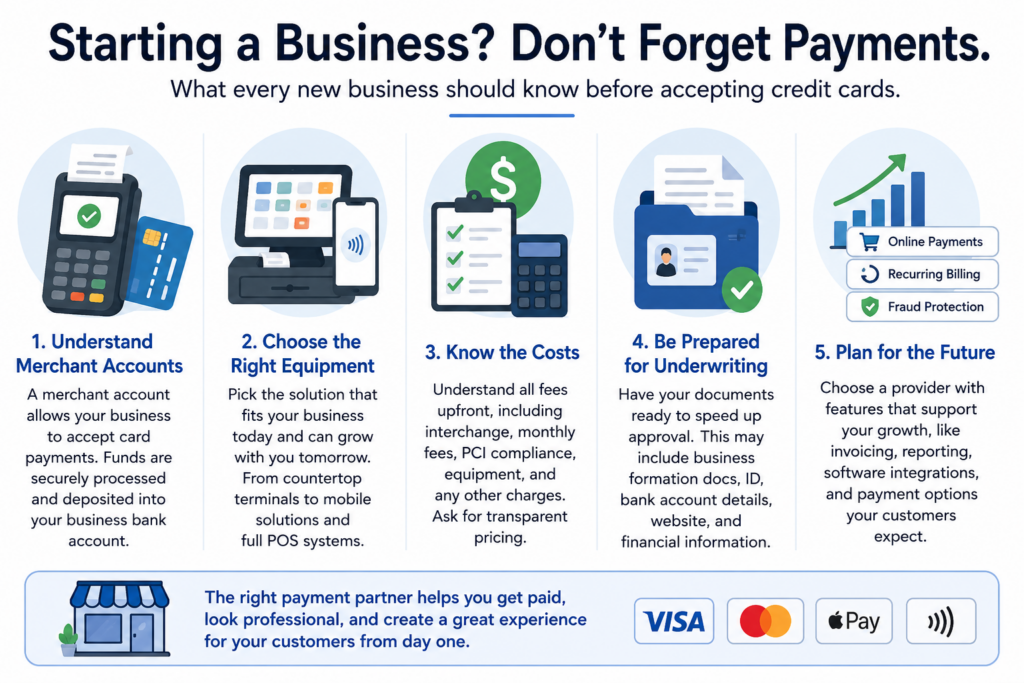
Starting a new venture entails an extensive list of things to do, and one of the major things on the list involves taking payments. The modern consumer expects to pay using a credit card, a debit card, or any other digital wallet, making payment processing almost mandatory for every business.
It is therefore crucial to learn about merchant services and what to look for in a payment processor before settling on one. It will make things easier for your business down the line.
Understand What a Merchant Account Does
Merchant Account: It refers to an account which enables the merchant to process payments through the internet or other means of electronic commerce. Whenever the consumer makes payment for his or her purchases, the money is processed, verified, and deposited into the bank account of the business organization.
Most payment systems incorporate the three services, namely the merchant account, payment gateway, and processing together.
Choose the Right Equipment
All businesses have different requirements when it comes to accepting payments. A brick-and-mortar store might require the use of a countertop terminal, whereas a contractor would rather utilize Tap to Pay or a card reader. POS systems can be useful for restaurants, salons, and retail businesses because they handle inventory, scheduling, and customer data management.
Choosing a device that is right for your business now and will accommodate future needs will prevent unnecessary upgrades in the future.
Know the Costs
Payment processing does not consist of only one fee. Interchange fee, processor fee, monthly service fee, PCI fee, or equipment fee are some of the costs you can incur based on the payment service provider.
It is essential to request transparent pricing to ensure that you fully comprehend the entire fee schedule before signing any agreements. A payment service provider that provides transparent pricing makes working together more convenient.
Be Prepared for Underwriting
Payment gateways usually ask for proof that your company is legitimate prior to setting up an account. They may require you to furnish proof of formation of the company, ID, a business bank account, a website, and/or financial records.
This would make the process faster for you.
Think Beyond Today’s Needs
As your company expands, your payment solution should evolve along with it. Consider the following capabilities: online invoicing, recurring payments, digital wallets, reporting, fraud protection, and software integrations that can help you in the future.
Selecting the right payment service provider from the very beginning will build a solid foundation for your business. Having transparent pricing, good customer support, and payment solutions that suit your requirements, you will be able to offer your clients a secure checkout process right away.