
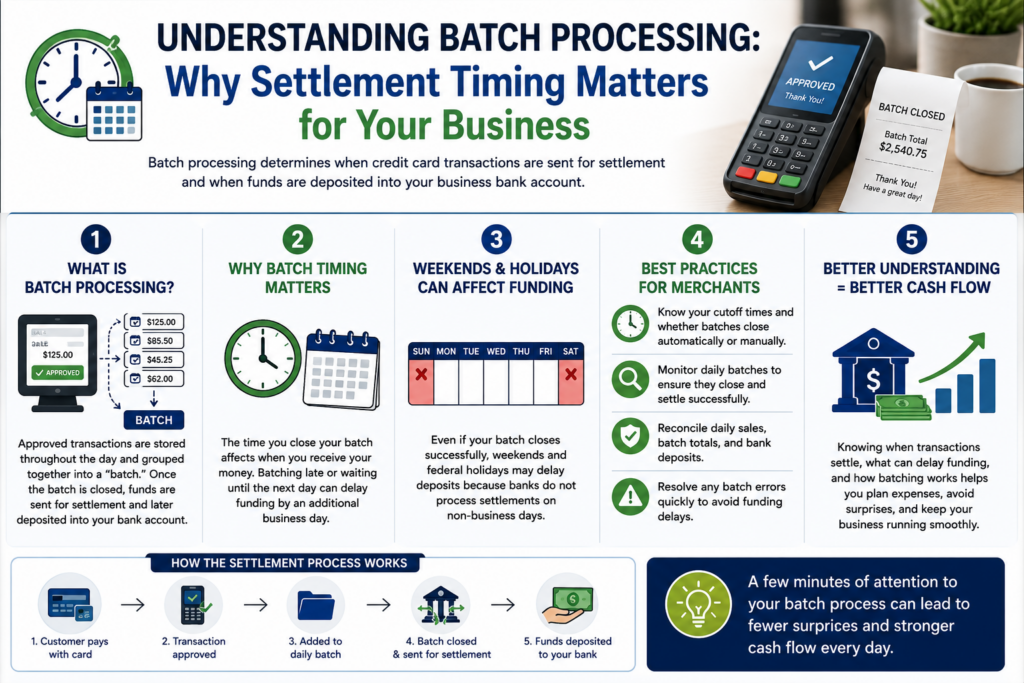
Almost every businessman understands that after accepting credit card payments from customers, the money does not immediately end up in his bank account. The transaction requires what is called batch processing, which refers to the time at which the funds will be sent to the merchant’s bank account.
Knowing about batching may help you with managing your cash flow and avoiding any unpleasant financial surprises in the future.
What Is Batch Processing?
During the course of the day, all the transactions that take place using your credit or debit cards will be temporarily stored in your payment terminal or POS system. Rather than settling all the individual transactions separately, all the transactions are bundled up to form what is called a “batch.”
The payment processor then starts off the settlement process after closing the batch by sending the money through the payment network.
Why Batch Timing Matters
Your batch closure will impact your time of receiving payment. While some merchants have automatic batch closure at the end of each business day, others manually close their transactions before batching them.
Batching the transactions for the next day means that the merchant could be delayed one more business day. This can make a world of difference especially for merchants who require daily cash flow to pay salaries or buy supplies.
Weekends and Holidays Can Affect Funding
Even if your batch is processed successfully, weekends and holidays may affect the deposit process, since many financial institutions do not process settlements during the weekends or holidays.
This knowledge will assist you to avoid running out of money in your account during the festive season.
Best Practices for Merchants
Check your payment gateway’s batch cut-off time to know whether your business closes automatically or manually.
Keep an eye on your batches each day to make sure the transactions are processed before your employees leave for the day. In case of failure, your payments will be left hanging until the problem is sorted out.
In addition to this, comparing your daily sales with the number of batches deposited in the bank will help you detect any inconsistencies.
Better Understanding Leads to Better Cash Flow
While batch processing might be something that happens in the background, it is nevertheless important for the financial activities of your business. Being aware of transaction settlement times, deposit durations, and any factors which might affect funding is helpful in planning expenditures and maintaining good cash flow.
A short time spent learning about the process of payment processing can save you from many headaches in the future.