
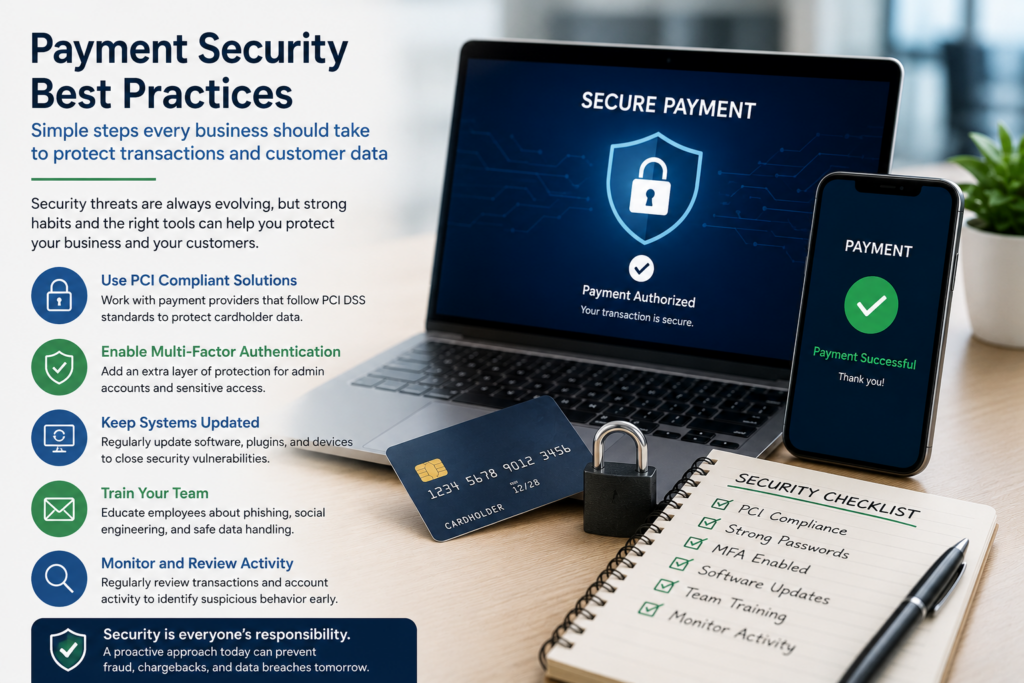
The evolution of online scams presents merchants with a problem – ensuring safety without making the payment process cumbersome for users and driving them off their website. Luckily, advancements in payment authentication technology have been rapid lately. Solutions like passkeys, biometric authentication, and step-up verification allow merchants to increase safety and user satisfaction simultaneously.
Understanding how these solutions work will help you to minimize online scams and ensure your customers’ account security.
What Is Payment Authentication?
Authentication of payment entails proving that the customer who wants to make a purchase is indeed who they claim to be. This means that the customer will not have any problem completing transactions and making their purchases, but fraudulent individuals will be stopped.
The conventional way of achieving authentication entailed using passwords, security questions, and one-time codes. These methods are not out of date; however, other techniques that are more effective are now emerging.
The Rise of Passkeys
Passkeys may soon become some of the most exciting innovations that offer a more secure alternative to the conventional password. Passkeys enable the user to access their accounts by simply logging into a trusted device.
This helps prevent phishing attacks, credential stuffing, and reuse of passwords. It makes things easy and quick for the customers while also ensuring better security for the merchants.
How Biometric Authentication Works
Biometric authentication utilizes physiological traits like fingerprints or facial recognition to prove one’s identity.
This is something that people already do when they unlock their phones using biometrics; therefore, integrating this into payment processes should not be too challenging. Biometrics can serve as a means of verifying that the card owner is indeed making the purchase.
It will also reduce fraud since it is hard to forge biometric information.
Understanding Step-Up Verification
All transactions are not equally risky. The use of step-up verification means that merchants can add authentication as and when needed.
For instance, if a customer makes a normal transaction using an old trusted device, then there is no problem at all, but if any suspicious activity is detected regarding location or other issues, then authentication may be required before proceeding.
Finding the Right Balance
The best payment authentication methods will take into consideration both security and customer experience. Lack of security may result in more losses due to fraud while excessive security checks may result in customer frustration and abandonment of purchase.
Use of state-of-the-art technologies for payment authentication including passkeys, biometrics, and smart step-up authentication is key to enhancing the shopping experience.