
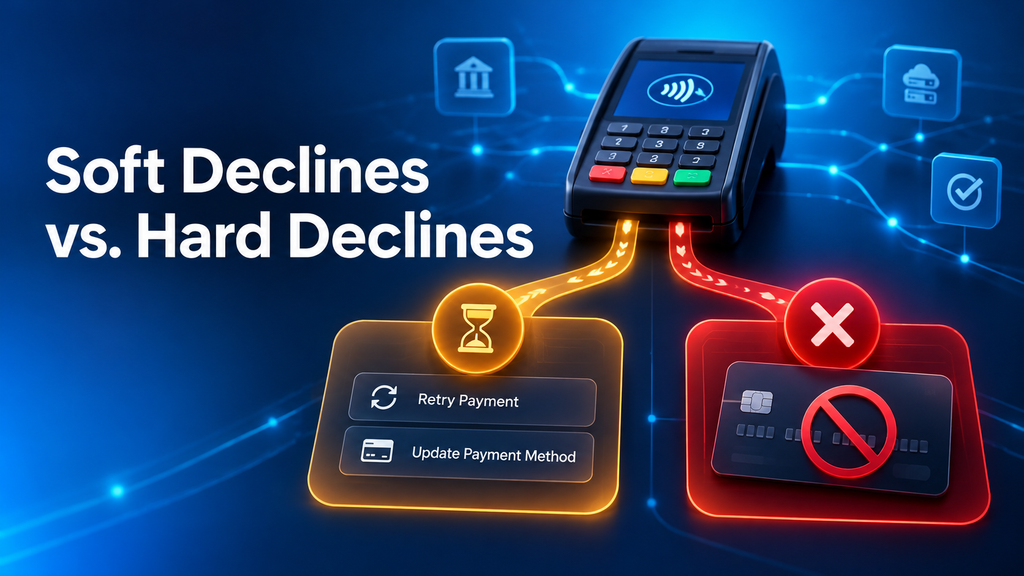
Not every declined card transaction means the same thing. Some declines may be temporary, while others indicate that the payment method should not be tried again. Knowing the difference between soft and hard declines helps merchants recover legitimate sales without creating duplicate attempts or upsetting customers.
A soft decline suggests a problem that may be resolved. Examples can include insufficient funds, a temporary issuer restriction, an expired authorization, or an authentication step that was not completed. The exact response depends on the issuer and gateway. A customer may succeed after contacting the bank, correcting information, or using another payment method.
A hard decline is more final. It can indicate a closed account, invalid card number, reported lost or stolen card, or another condition that makes repeated attempts inappropriate. Merchants should not encourage customers to keep submitting the same card when the response says it cannot be accepted.
The checkout message should be helpful without revealing fraud rules. Tell the customer that the payment was not approved and offer safe next steps, such as checking the entered information, contacting the card issuer, or choosing another method. Staff should never guess why a bank declined a transaction or promise that the next attempt will work.
Recurring billing requires a careful retry policy. A limited schedule may recover a payment after funds become available, but rapid repeated attempts can increase costs and customer complaints. Use gateway tools that classify responses and stop retries after a hard decline. Send a clear notice so the customer can update the payment method.
Track decline codes and recovery rates over time. A sudden increase after a website update may signal an integration or authentication problem rather than a change in customer behavior. The goal is not to force every sale through. It is to recognize which payments deserve a sensible second step and which ones should stop, protecting both revenue and the integrity of the merchant account.
For phone and in-person sales, employees should use the same response policy as the website. A decline should not lead to handwritten card details or an unapproved workaround. Consistent handling protects customer information and gives managers better data about why payments are failing.