
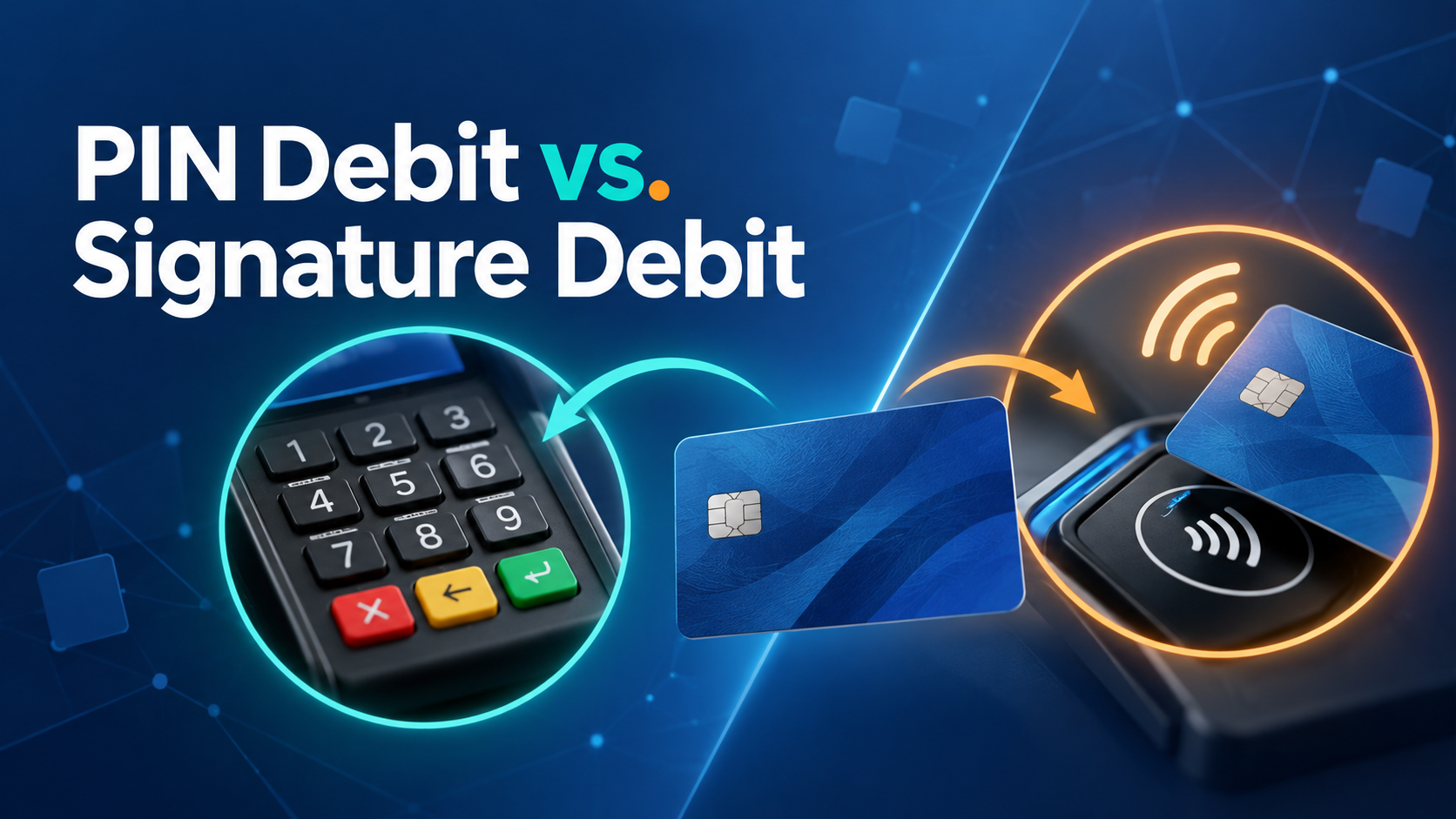
A customer may use the same debit card in two different ways at checkout: entering a PIN or completing the transaction without one. Both options draw money from a checking account, but they can travel across different payment networks and may carry different costs, security features, and dispute rules for the merchant.
PIN debit usually routes through a debit network after the customer enters a personal identification number. The fee structure may include a flat amount, a percentage, or both, depending on the network and merchant agreement. PIN entry adds a layer of customer verification and can be helpful for transactions where counterfeit or stolen-card risk is a concern. Cash-back transactions also normally require PIN debit support.
Signature debit is a familiar industry term, although an actual signature is rarely collected today. The card is processed through a major card network in a manner that looks similar to a credit transaction. The customer may tap, insert, or swipe the card and complete the purchase without entering a PIN. Costs can vary based on the merchant category, transaction amount, card type, and pricing model.
Neither option is automatically cheaper for every business. A small-ticket merchant may see a different result than a company with larger average sales. Routing choices can also depend on terminal capabilities, card-network rules, and how the processor has configured the account. Merchants should review real transaction data instead of relying on a simple claim that one debit method always costs less.
The customer experience matters too. Some shoppers prefer PIN entry, while others expect tap-and-go speed. A properly configured terminal should present available choices clearly without confusing prompts. Business owners should ask their provider which debit networks are enabled, how each route is priced, and whether cash back is supported. Comparing monthly statements and average ticket sizes can reveal the most practical setup. The goal is a debit acceptance strategy that balances cost, security, speed, and customer preference.
Ask for reporting that separates PIN debit, non-PIN debit, and credit transactions. That breakdown makes a pricing review more meaningful and can reveal whether employees or terminal prompts are steering customers toward one method. Any routing change should be tested for both savings and usability.