
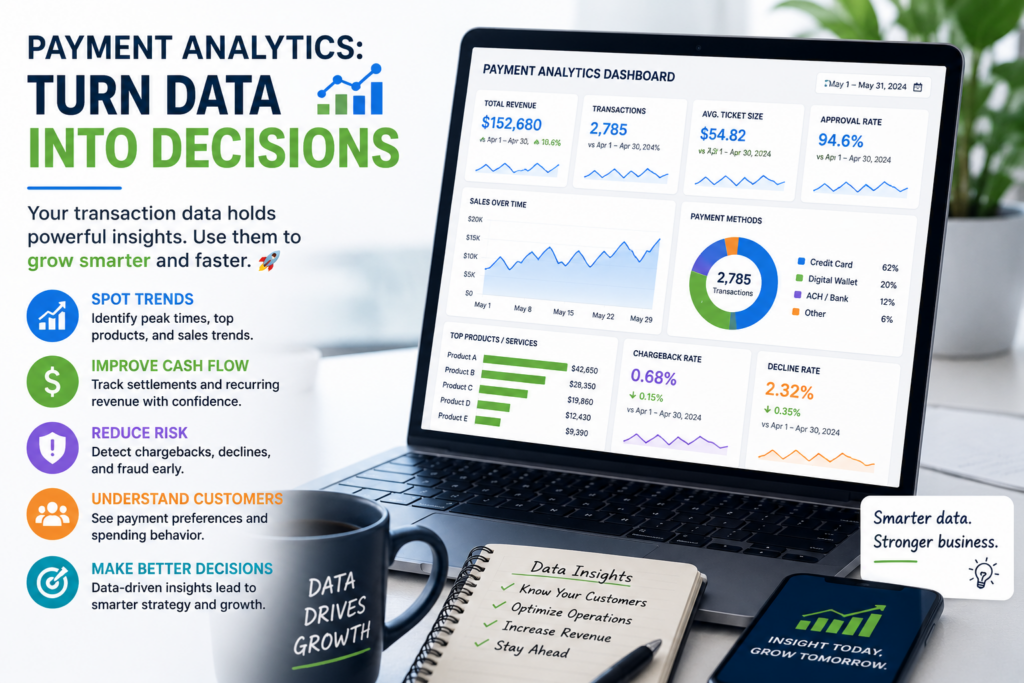
Every payment is a story. More than just executing financial transactions, payments provide valuable information that businesses can use to understand consumer behavior, sales trends, cash flow, and overall business performance. By harnessing the power of payment analytics, small and medium businesses will be able to make better-informed decisions for sustainable growth.
Fortunately, payment data is something that many businesses have at their fingertips. It just takes knowing what to do with it.
Understanding More Than Just Sales Totals
While most business owners will typically focus on gross revenue figures first, transaction analytics can show so much more than just daily sales figures.
Transaction analytics can assist businesses in identifying:
• Time periods that yield the highest sales figures
• The average order value
• Products or services that are highly demanded
• Spending behaviors of consumers
• Trends in refunds and chargebacks
• Payment methods preferred by consumers
Such information can assist businesses in understanding consumer behavior better.
Improving Cash Flow Visibility
Payment analytics can also assist firms in managing their cash flows. Through the analysis of payment timing, monthly revenues, and settlements, business owners can predict their upcoming income streams and allocate funds to various obligations such as wages, stock purchasing, or vendor payments.
In subscription-based businesses, payment analytics can be used to detect payment failures, customer churn patterns, and recurring payment efficiency.
Spotting Problems Earlier
One of the primary benefits of payment analytics is its ability to detect problems early on. Increased instances of chargebacks, higher numbers of refunds requested, and decreased approval rates may all be indications that something is amiss and needs to be addressed.
For instance, an increased number of declined transactions may indicate that there are problems with your checkout process, overly strict fraud parameters, or even issues with how customers are billed.
Understanding Customer Preferences
The payment history data can also indicate customer payment preferences. For instance, some merchants may realize an increasing number of customers favoring mobile wallets, contactless payments, ACH payments, or BNPLs.
Gaining knowledge of such preferences will allow merchants to ensure a seamless, effortless, and speedy payment experience.
Better Data Leads to Better Decisions
The best organizations do not only depend on intuition. Organizations can make decisions about marketing, staffing, inventory management, pricing, and enhancing the customer experience using data.
Modern payments do not just process transactions; they offer valuable information in real time that organizations can use to make better business decisions daily.
Turning Payments Into Business Intelligence
While payment analytics may seem like complex terminology, the concept is straightforward. Gaining visibility into transaction data allows organizations to function more effectively, mitigate risks, and identify opportunities for growth.
Understanding the implications of your payment data can empower organizations to make informed decisions and prepare for evolving customer behavior and market dynamics.