
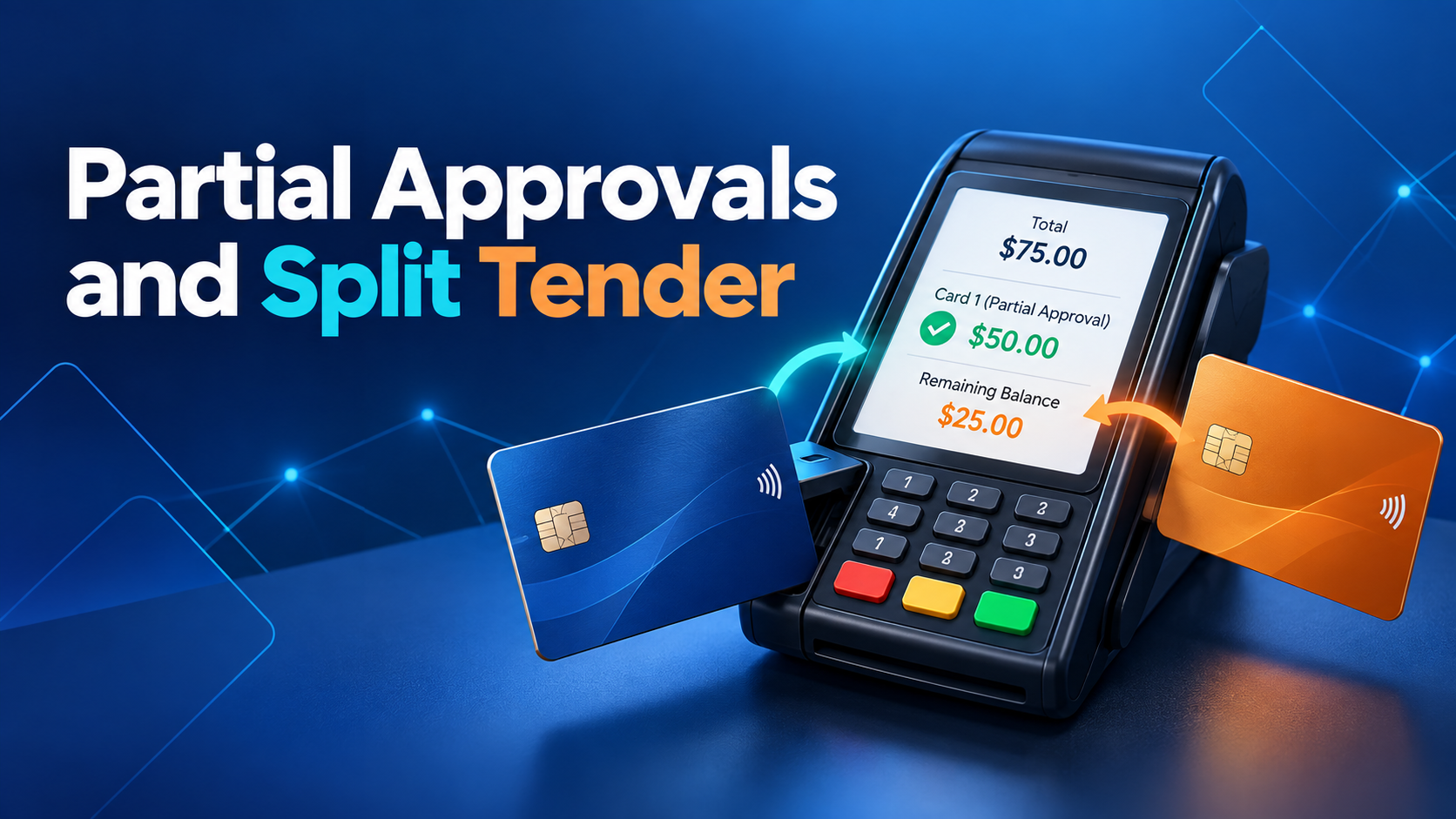
A card does not always decline simply because the account lacks enough money for the full purchase. In some situations, the issuer may approve part of the amount instead. This is called a partial authorization, and it allows the customer to pay the remaining balance with another payment method.
Partial approvals are especially common with prepaid cards and gift cards. For example, a customer may have $18 left on a prepaid card while attempting a $25 purchase. The issuer can approve $18, leaving $7 due. The merchant’s POS must recognize that response, display the remaining balance clearly, and allow a second tender such as cash, another card, or a store gift card.
The process sounds simple, but poor configuration can create confusion. An employee might mistake a partial approval for a completed sale, hand over the merchandise, and never collect the remainder. A system may also print a receipt that is difficult to understand or fail to connect both payments to the same order. Refunds become more complicated because each portion should generally be returned to its original payment method.
Merchants should test split tender workflows before relying on them. Employees need to know what a partial approval message looks like, where the unpaid balance appears, and how to cancel the transaction if the customer cannot cover the difference. Ecommerce businesses should confirm whether their gateway and shopping cart support partial authorizations, since many online checkouts are designed for a single payment source.
Clear customer communication prevents awkward moments. Explain the amount approved, show the balance still owed, and provide a receipt that lists every tender used. Businesses should also reconcile split payments carefully so the order total matches the combined transactions. When supported correctly, partial approvals can save sales that would otherwise be declined. The key is making sure the POS, processor, and staff all handle the remaining balance consistently.
Before enabling the feature, ask the provider whether tips, taxes, gift cards, and returns behave differently with multiple tenders. A short employee practice session using test transactions can prevent an expensive mistake during a busy shift, when customers and staff are both moving quickly.