
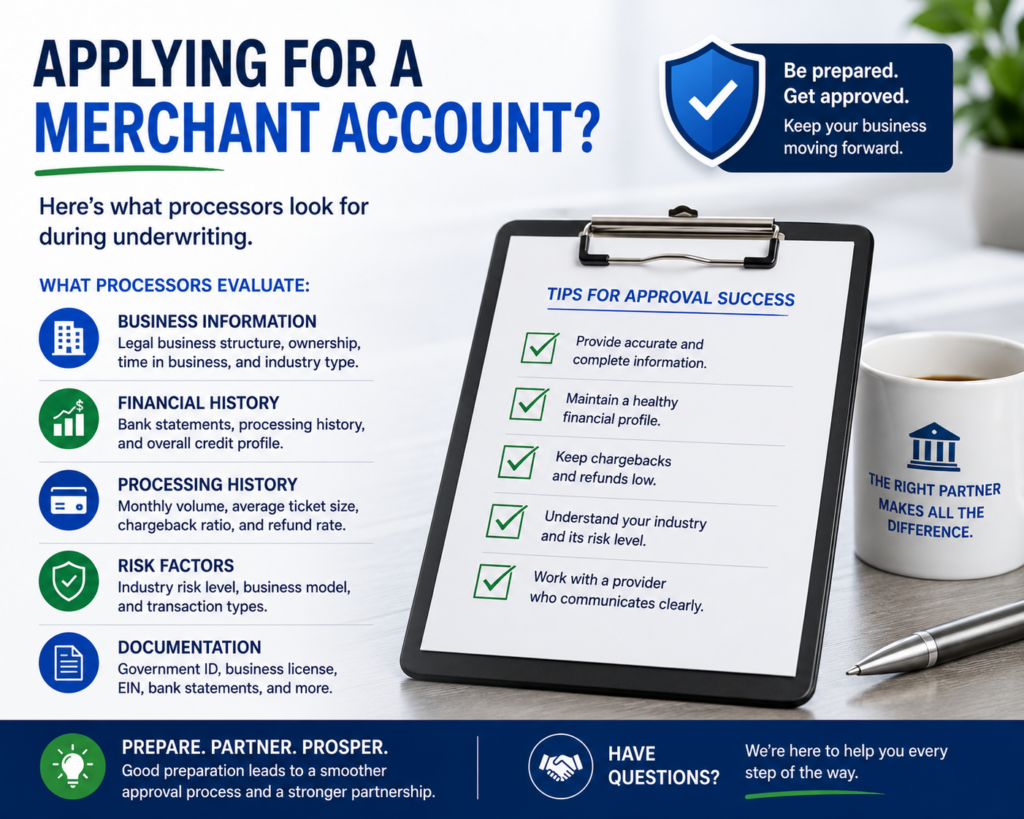
Getting a merchant account is essential for any company planning on accepting credit cards for payments. Even though the process of applying is simple, all payment processors do not always accept every request made to them. Several considerations are made before a merchant account is approved by a processor because there is an element of risk involved in all transactions.
Knowing the underwriting process will be helpful to the merchant in getting their application approved.
What Is Merchant Account Underwriting?
Underwriting is a process used by the companies that handle payments to assess the company applying for a merchant account. This helps them establish whether the company poses any risk.
The payment processers are liable for chargebacks, frauds, and losses that arise from the transaction and therefore must ensure that the merchants are legitimate businesses.
Key Factors Underwriters Review
The very first aspect of a review that underwriters take into account is business information. It comprises information regarding business registration, ownership, tax identification number, and banking information.
Underwriters also evaluate expected processing metrics, which include the estimated monthly volume, average transaction amount, and the types of goods and services to be sold. The businesses that have relatively high chargeback rates will get additional consideration from underwriters.
Website information is one more aspect of a review that will be assessed by underwriters. In general, the websites should contain product descriptions, prices, contact information, T&Cs, refund and privacy policies.
Why Industry Type Matters
There are industries that are known to have a higher degree of risk compared to other industries. Subscription-based businesses, travel agencies, internet coaching, nutraceuticals, and specific types of ecommerce might have extra underwriting steps, owing to the fact that these businesses usually have a higher rate of chargebacks or fraudulent transactions.
High-risk does not automatically mean that an application cannot be approved.
Preparing for a Successful Application
Merchants may be able to increase their chances of getting approved if they provide full and proper information from the beginning. Lack of documentation, conflicting information, or incomplete websites will result in delays in the review process.
It is important for businesses to have clear-cut customer service processes, clear refund policies, and reasonable time frame estimates.
Understanding Reserves
In certain situations, there may be a requirement for a processor to hold reserve funds. Reserve funds are funds that are set aside from the processing fees collected to cover losses or chargebacks.
Although reserve funds are usually held by high-risk merchants, they do not automatically mean that the business will end up failing.
The Bottom Line
It must be noted that underwriting of merchant accounts is aimed at protecting both the payment processor and the merchant from taking on any undue risks. Knowing what factors are considered during the underwriting process and preparing required documents will help a company go through it faster and easier.