
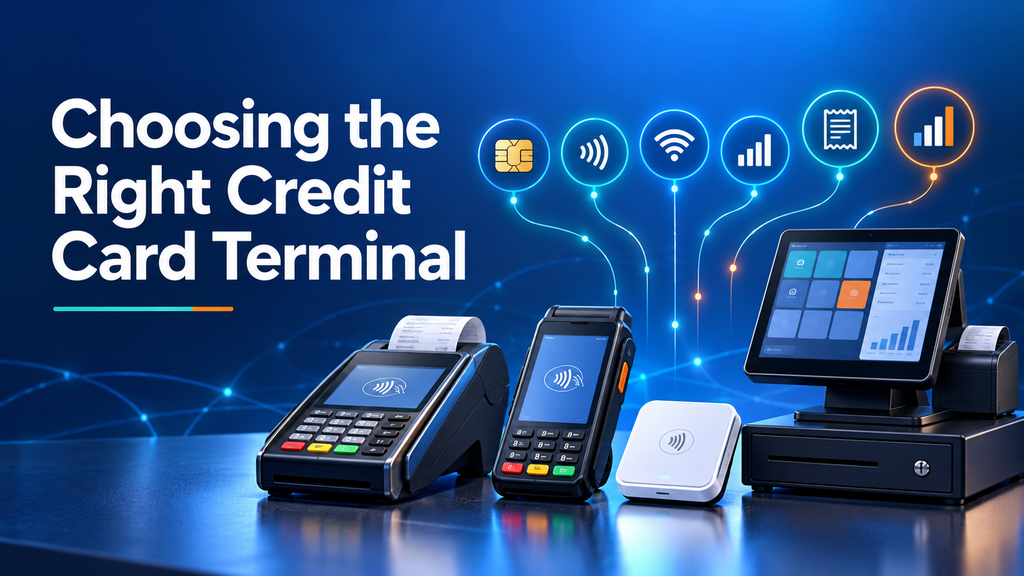
The right credit card terminal depends on where customers pay, how employees work, and what the business needs beyond a basic approval. Choosing by appearance or price alone can leave a merchant with a device that does not fit daily operations.
A countertop terminal works well at a fixed register with dependable power and internet. A wireless or mobile device may be better for restaurants, delivery businesses, events, or service teams that collect payment away from a desk. A full POS system can add inventory, employee management, customer records, and detailed reporting.
Confirm the payment methods customers expect. The device should support EMV chip cards, contactless cards, and major digital wallets. Businesses that use PIN debit, tips, cash back, gift cards, or EBT should ask whether those features are supported and how they appear at checkout.
Connectivity is just as important as features. Review Ethernet, Wi-Fi, cellular, and offline capabilities. An offline mode can keep a line moving, but the merchant may accept added risk because the transaction is not approved in real time. A backup connection should be tested before an outage.
Look at the complete cost. Ask about purchase price, monthly software fees, cellular service, accessories, replacements, warranties, and return requirements. A device advertised as free may still have conditions, so read the agreement and understand what happens if the account closes.
Finally, evaluate support and integration. The terminal should connect properly with the POS, accounting tools, gateway, or customer-management system the business uses. Employees need a simple process for receipts, voids, refunds, and end-of-day batches. Before committing, request a demonstration using the business’s real workflow. The best terminal is the one that accepts payments reliably, produces useful records, and remains easy for staff and customers during the busiest part of the day.
Ask how the device handles accessibility and customer privacy. Screen angle, font size, audio or tactile options, and PIN shielding can affect real users. The terminal should also keep full card numbers off customer receipts and prevent employees from viewing payment data they do not need. Check replacement availability before choosing a model that is being discontinued.