
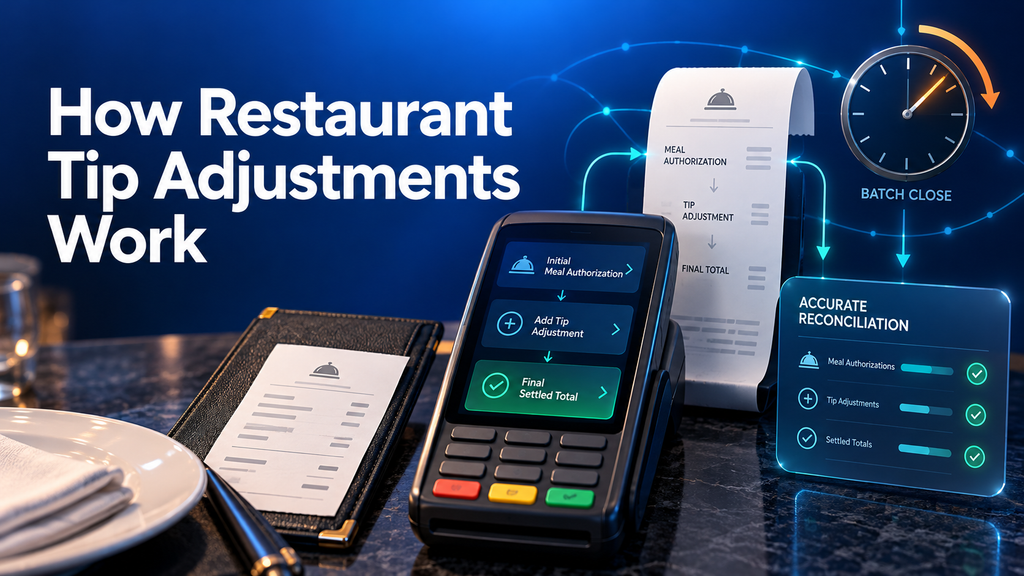
Restaurant credit card processing often begins before the final tip is known. The card is authorized for the meal amount, and the gratuity is added later. That workflow is familiar, but poor controls can create funding differences, customer complaints, and unusually large authorization adjustments.
In a traditional tip-adjust environment, the server presents the check after the initial authorization. The customer writes a tip and total, and an employee enters the final amount before the batch closes. The settled transaction includes the completed total. Modern pay-at-table and customer-facing devices may capture the tip before authorization, reducing manual entry.
Accuracy matters. A handwritten 1 can look like a 7, and a rushed employee can enter the wrong table’s tip. Restaurants should keep signed receipts when applicable, require employees to review the total, and set manager approval for large adjustments. The POS should prevent a tip from being entered twice.
Authorization practices can affect the customer’s available balance. Some issuers may temporarily account for an estimated gratuity even before the final amount posts. Restaurants should not promise exactly how a pending transaction will appear because the issuer controls the display and release of holds.
Complete tip entry before the batch cutoff. If tips are missing when the batch closes, the restaurant may need a correction process and could lose the gratuity. Managers should compare the POS total, tip report, batch total, and employee checkout before ending the day.
Train staff to distinguish a tip adjustment from adding an unauthorized charge. The customer should see the final amount on the receipt, and any later correction should follow documented procedures. With customer-facing tipping, clear prompts also matter. Suggested percentages should be easy to understand, and a custom or no-tip option should be available. A well-managed tip process protects employees’ earnings while keeping customer statements and merchant deposits accurate.
Restaurants should also define how tip corrections are handled after the customer leaves. A manager should review the receipt, document the reason, and follow the processor’s allowed procedure. Quietly changing a settled amount without evidence can create a dispute and undermine employee accountability.