
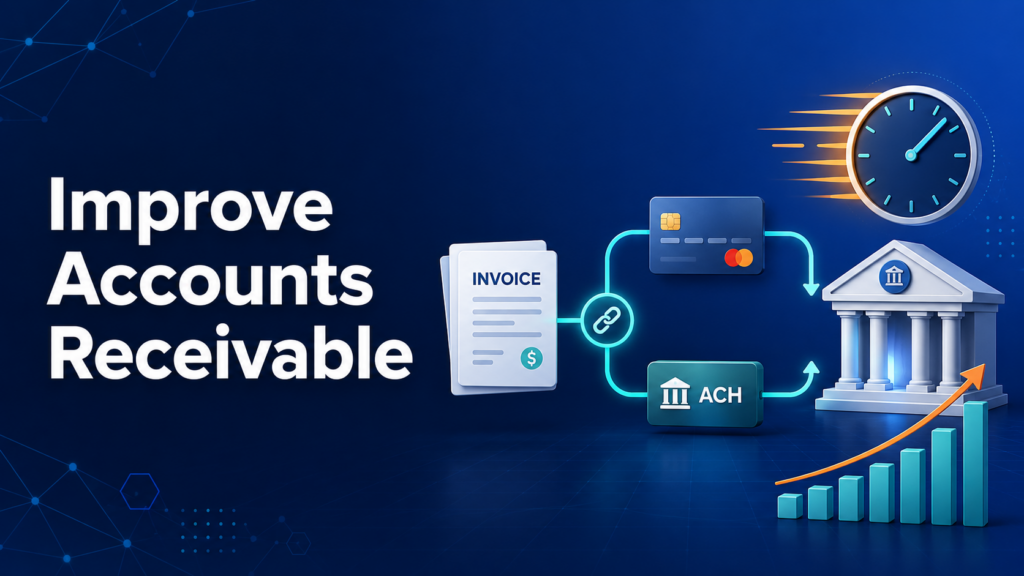
Slow accounts receivable is often treated as a customer problem, but the payment process may be adding friction. If clients must find a paper invoice, write a check, and mail it, even willing customers can delay. Modern payment tools give them a faster path while giving the business better visibility into what remains unpaid.
Why it matters
Start with clear digital invoices that show the amount, due date, work performed, contact information, and a secure payment link. Let customers choose appropriate options such as card or ACH. For repeat clients, tokenized card-on-file or bank information can reduce data entry, provided the customer has authorized its use.
Where problems begin
Recurring billing fits predictable retainers, maintenance plans, memberships, and installment schedules. Automated reminders can prompt customers before and after the due date without requiring an employee to send each message. The tone should stay professional, and every notice should make it easy to ask a billing question.
What merchants can do
Integration matters behind the scenes. When the payment system updates accounting or customer records automatically, staff spend less time matching deposits and typing transaction details. Apply payments to the correct invoice, distinguish fees from revenue, and create a process for partial payments, refunds, and chargebacks.
A practical next step
Measure days sales outstanding, invoice-to-payment time, failed payments, and the share of customers using each method. Do not add expensive options simply because they are available. The right setup removes steps for customers and manual work for employees. Faster collections usually come from making the expected action obvious, secure, and convenient from the moment the invoice arrives.
Payment speed will not fix unclear invoices or unresolved service issues. Review overdue accounts for common causes: missing purchase-order numbers, incorrect contacts, disputed work, or invoices sent to the wrong department. Fixing those upstream problems can matter as much as adding a payment button. Technology works best when the billing process itself is accurate.
Stay prepared. Review it regularly. Keep the process documented. Clear records make follow-up much easier. Ask questions before changing important account settings. Check the agreement because provider rules and timelines vary. A knowledgeable payment professional can help review the setup before business activity changes.