
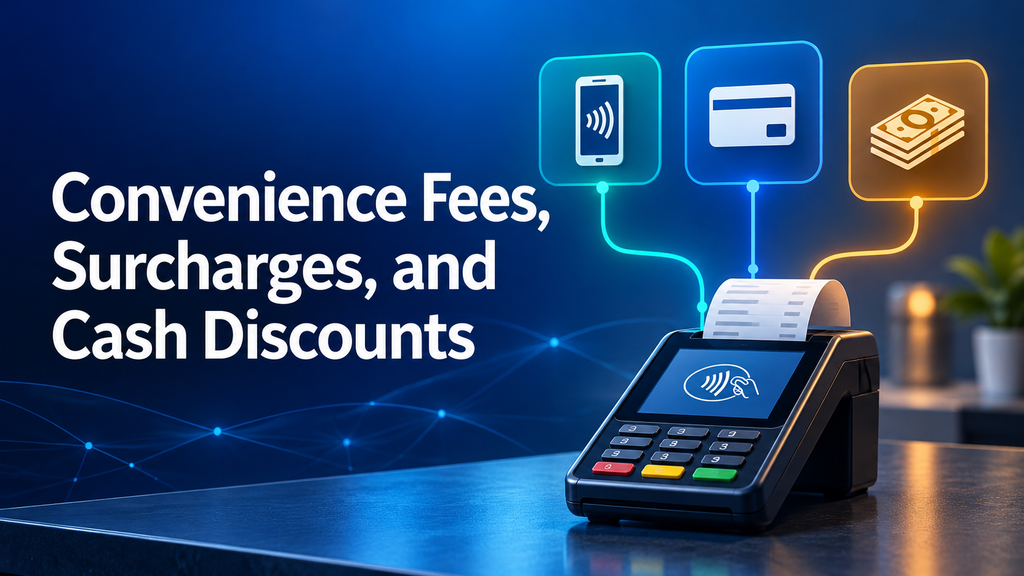
Convenience fees, credit card surcharges, and cash discounts are often discussed as if they were interchangeable. They are not. Each approach has different purposes, rules, disclosures, and technical requirements. Using the wrong label can create customer confusion and compliance problems.
A surcharge is an added amount connected to the customer’s use of an eligible credit card. Card-network rules and state laws may affect whether it is allowed, how it is calculated, which cards are included, and what notices are required. Debit and prepaid cards are generally treated differently from credit cards.
A cash discount uses posted pricing and gives a discount when the customer pays with cash or another qualifying method. The pricing, signage, receipt language, and terminal setup need to work together. A program should not be called a cash discount if the business simply adds an unexpected fee at the register.
A convenience fee is typically associated with paying through an alternative channel that is different from the merchant’s customary payment method. It is not a general name for every card-related charge. Eligibility and implementation can vary by card brand, merchant type, and payment channel.
Before launching any program, the merchant should consult its payment provider and qualified legal counsel about current requirements. State law and network rules can change, and a setup that works for one industry may not fit another. The provider should configure the terminal or gateway to apply the correct treatment and receipt wording.
Customer communication is essential. Display pricing and notices before payment, train employees to explain the choice accurately, and review receipts for consistency. Monitor complaints and refunds after launch. A compliant program should not rely on surprising the customer. It should present a clear choice and process each tender according to the rules that apply. Understanding the difference among these models is the first step toward selecting one that supports both the business and a fair checkout experience.
Audit the program after it goes live. Compare receipts, posted signs, website language, and actual terminal behavior. If those pieces describe different prices or fees, correct the inconsistency quickly. Customer complaints often reveal a disclosure problem before it becomes a larger operational issue.