
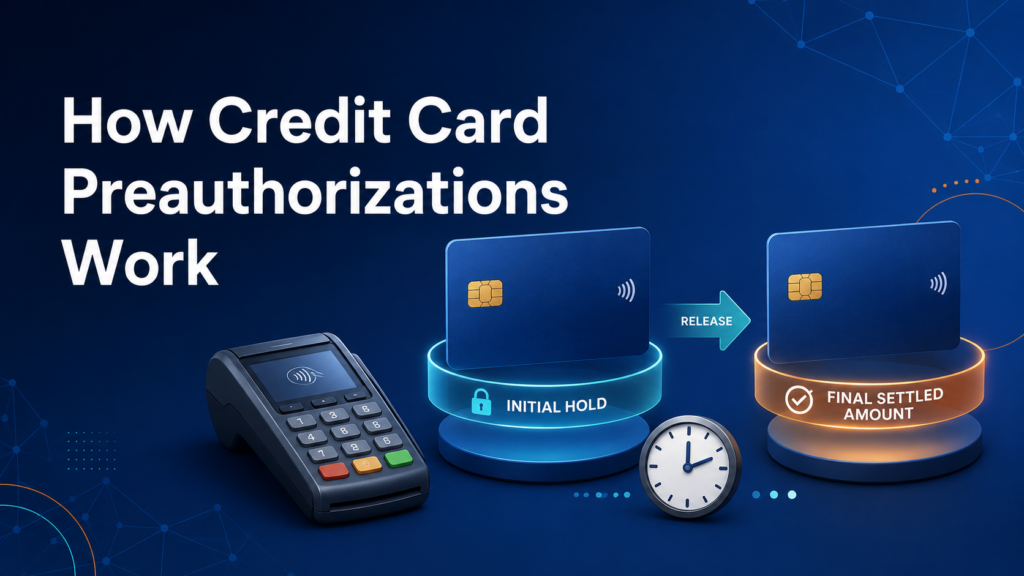
A preauthorization places a temporary hold on a cardholder’s available funds or credit before the final amount is known. Hotels, rental companies, restaurants, salons, fuel stations, and service businesses use holds to confirm that the card is valid and that money is available for an expected purchase.
Why it matters
The hold is not the final settled charge. A hotel may estimate room, tax, and incidentals at check-in. A restaurant may authorize the check before a tip is added. When the transaction is completed, the merchant submits the final amount and the issuer releases any remaining hold according to its own timing.
Where problems begin
Customers sometimes see both a pending amount and a final charge, which can look like duplicate billing. Usually the pending item disappears rather than posting, but release timing varies by bank and card type. Debit-card holds can be especially noticeable because they reduce the customer’s available checking balance.
What merchants can do
Merchants should explain the amount and purpose of the hold before running it. Use the payment system’s proper authorization, incremental authorization, and completion functions instead of creating unrelated charges. If the expected total increases significantly, follow the industry’s rules for obtaining additional authorization. Complete or reverse unused authorizations promptly.
A practical next step
Receipts and staff explanations should use plain language: the temporary hold may differ from the final bill, and the customer’s bank controls when pending funds become available again. Good communication will not speed every bank, but it reduces anxiety and support calls. A preauthorization works best when it protects the merchant without surprising the customer.
Avoid promising an exact release time unless the issuer has confirmed it. The merchant can show that an authorization was reversed or completed, but it cannot directly restore the customer’s available balance. Give the customer the transaction details needed to speak with the bank, and keep staff from creating a second reversal in an attempt to help.
Stay prepared. Keep the process documented. Train staff before problems appear. Clear records make follow-up much easier. Ask questions before changing important account settings. Check the agreement because provider rules and timelines vary. Small operational improvements can prevent expensive payment problems later.