
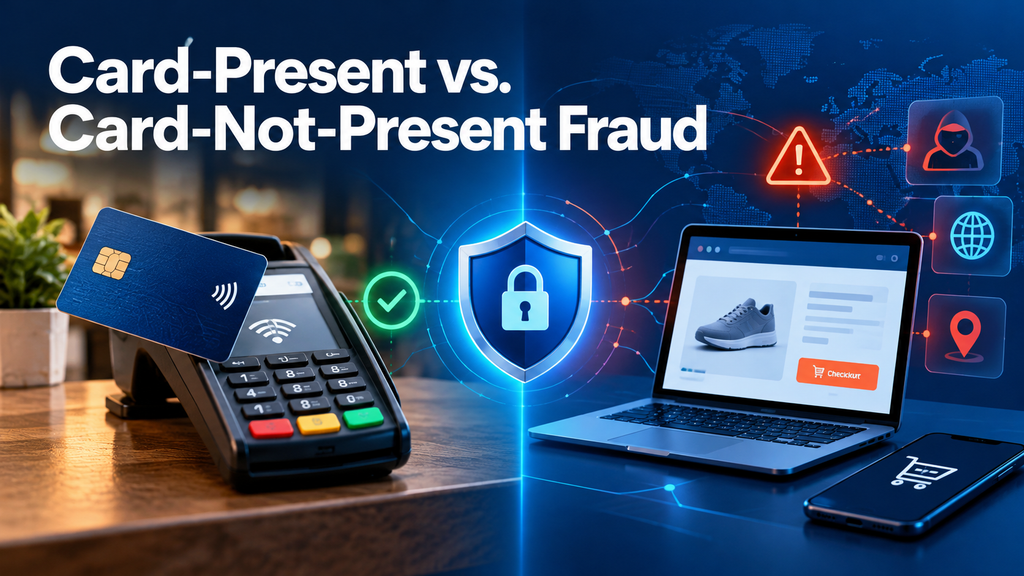
Card-present and card-not-present payments expose merchants to different types of fraud. A store can inspect the payment device and interact with the customer, while an ecommerce or phone-order business must decide whether the person entering the card information is the legitimate cardholder.
Card-present fraud often involves a lost, stolen, or counterfeit card. EMV chips and contactless payments create dynamic transaction data that makes simple counterfeit use more difficult. Merchants should use the chip or tap function when available and treat repeated fallback requests with caution.
Card-not-present fraud relies more heavily on stolen account information, compromised customer logins, automated card testing, and delivery manipulation. The criminal does not need the physical card. Address verification, security-code checks, device data, velocity controls, and risk scoring can help, but no single filter catches every bad order.
The evidence needed for a dispute also differs. A card-present merchant may rely on the EMV transaction record and receipt. An online merchant may need the order details, customer communications, IP or device information, shipment tracking, delivery confirmation, and proof that the customer used the account before.
Businesses should design controls for their actual sales channels. A fraud rule that works for a local counter may be irrelevant online. An ecommerce filter that blocks every address mismatch may reject legitimate travelers or gift buyers. Review results and adjust settings using confirmed fraud and false-positive data.
Train employees not to move a risky transaction into a weaker channel simply to get an approval. A customer whose chip fails should not automatically be allowed to key in a large sale without review. Likewise, an online order should not bypass fraud controls because the buyer calls and pressures an employee. Matching the security method to the transaction environment helps merchants approve more legitimate customers while reducing losses from the fraud patterns most likely to reach that channel.
When a business uses both channels, link fraud intelligence where possible. A customer account that repeatedly fails online and then attempts a large keyed transaction by phone deserves review. Shared order history can reveal a pattern that each channel would miss when examined alone.