
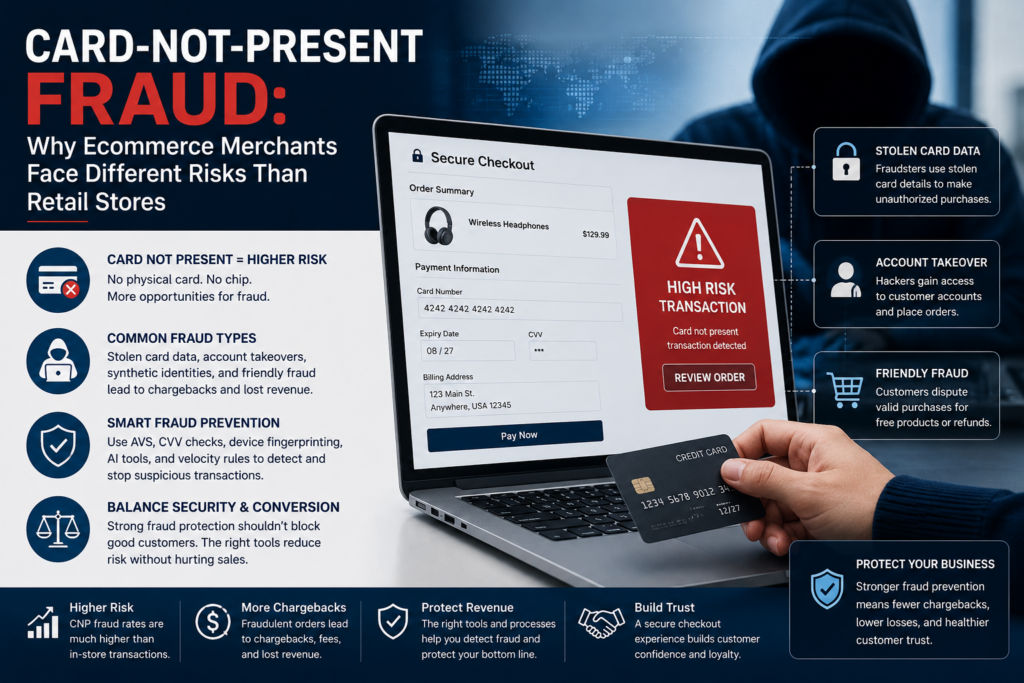
What Is Card-Not-Present Fraud?
In case a customer makes a purchase in the physical store through a chip card, contactless payments, or mobile wallet, such kind of transactions is called card-present transaction. In case a customer makes a purchase online, through phone calls, or via digital invoices, the merchant cannot verify the payment card physically. Such kind of transactions is called card-not-present (CNP) transaction.
The rapid development of ecommerce has resulted in card-not-present fraud becoming the major issue for many online merchants. Indeed, because of the absence of physical presence of the card, there are more chances for fraudsters to commit fraudulent activities.
Why Ecommerce Merchants Face Greater Risk
Retail stores are fortunate enough to be able to leverage security features present in modern payment cards, such as the EMV chip and contactless verification. Such options are not available to ecommerce merchants when processing transactions.
In order to verify a transaction, an ecommerce business has to use information about the customer’s billing address, CVV code, data about their device, and behavioral analysis. Although these methods work well, they are not foolproof.
That is why fraud levels for online payments are generally higher than those for brick-and-mortar payments.
Common Types of Ecommerce Fraud
There are many ways that not having the card itself could be involved in committing fraud. The criminal can use stolen card information available in the dark web, hijack accounts through compromised passwords or generate fraudulent transactions with fake identities.
The other problem that merchants are increasingly facing is known as friendly fraud, where a customer disputes a transaction through his or her card provider.
How Merchants Can Reduce Fraud
Fraud reduction is something that needs to be done through multiple layers. There are many ecommerce firms that have used AVS, CVV check, device fingerprints, velocity checks, and AI-based fraud detection tools to detect fraudulent transactions.
Other forms of strong authentication, such as multi-factor authentication and passkeys, may help reduce account takeover fraud.
Finding the Right Balance
Prevention of fraud is essential but merchants need to take precautions to ensure that they don’t introduce too much friction during the payment process. Too aggressive anti-fraud systems will lead to loss of genuine customers.
Top ecommerce merchants manage to strike the right balance between security and convenience by blending fraud prevention technologies with streamlined checkout processes.