
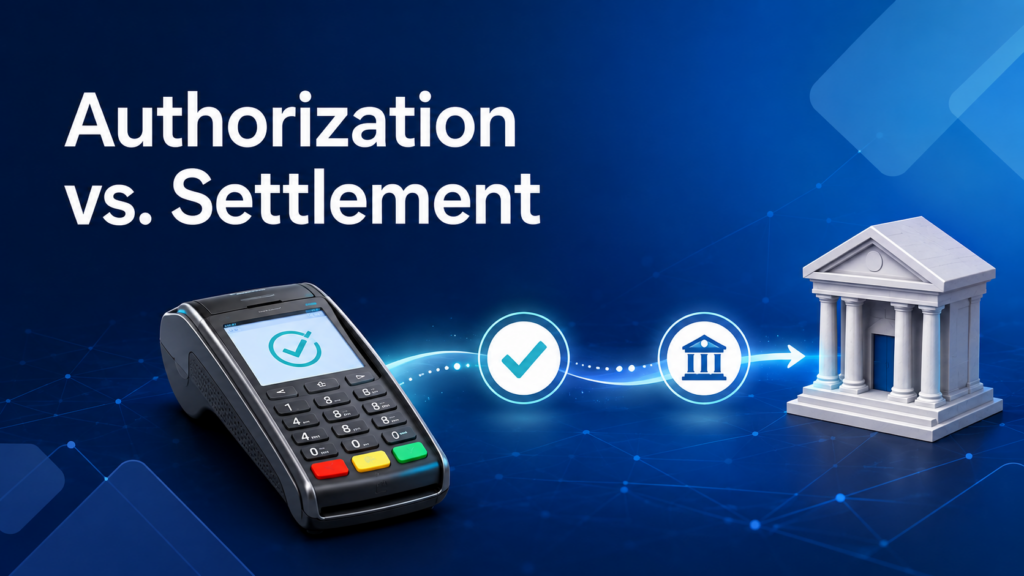
A customer pays $100, the terminal says approved, and the business owner expects exactly $100 to appear in the bank. Payment processing is rarely that immediate. The approval is an authorization, while the movement of money happens later through settlement. Understanding the gap helps explain pending charges, missing deposits, tip adjustments, and daily totals that seem not to match.
Why it matters
During authorization, the issuing bank checks the card, available credit or funds, and its fraud rules. If approved, the issuer reserves the amount and sends an approval response. No final transfer has occurred yet. That is why customers may see a pending transaction even though the merchant has not received the money.
Where problems begin
Settlement begins after approved sales are submitted, often when the point-of-sale system closes its batch. The processor sends transaction details through the card networks, and funds are routed toward the merchant’s account. Batch cutoffs, weekends, holidays, processor schedules, and the merchant’s bank can affect when the deposit arrives.
What merchants can do
Several normal events can change the numbers. Restaurants may authorize the meal amount and settle a higher total after a tip is added. A void can remove a sale before settlement, while a refund is a separate transaction after settlement. Fees may be deducted daily or billed monthly. Multiple locations or batches may also be combined into one bank deposit.
A practical next step
Reconciliation is easier when someone compares the POS closeout report, processor batch report, and bank deposit every business day. Investigate differences by transaction date and batch number rather than comparing a single sales total with a single deposit. Once authorization and settlement are treated as separate stages, most apparent shortages have a straightforward explanation.
Create a simple reconciliation worksheet with columns for gross sales, tips, refunds, voids, fees, net batch, and deposit date. The first few days may take extra effort, but patterns quickly become visible. If a batch remains unmatched, the processor’s trace or reference number can help the bank locate it.
Review it regularly. Keep the process documented. Train staff before problems appear. Ask questions before changing important account settings. Check the agreement because provider rules and timelines vary.