
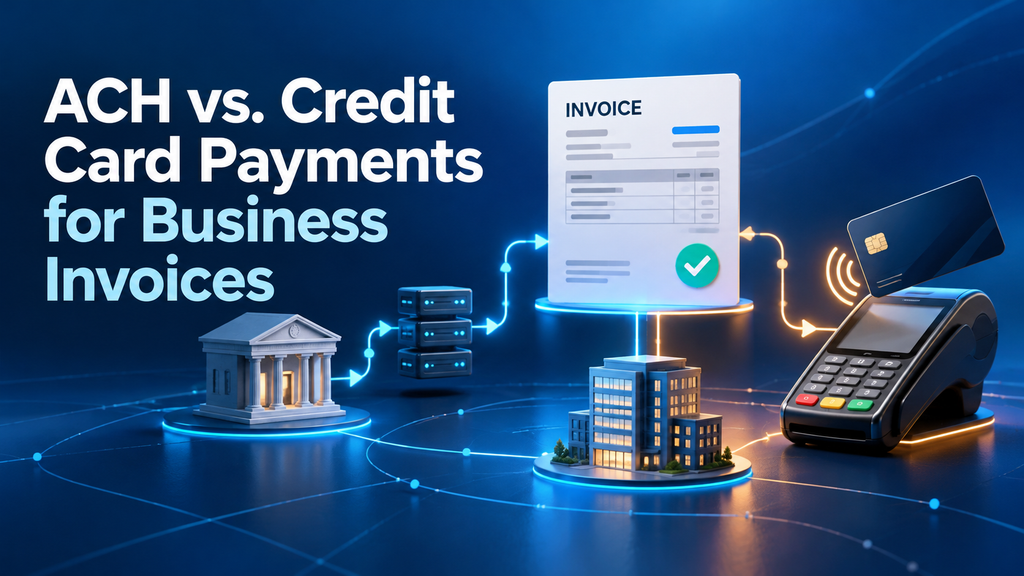
Businesses collecting invoices often offer both ACH and credit card payments. Each method has advantages, and the right choice depends on transaction size, payment speed, customer preference, and the risk of a return or dispute.
ACH moves money between bank accounts through the Automated Clearing House network. It can be cost-effective for larger invoices and recurring business payments. However, ACH transactions are not always final when submitted. A payment may be returned for insufficient funds, an invalid account, an unauthorized debit, or another reason.
Credit cards generally provide an immediate authorization response and may offer customers rewards, float, or easier expense tracking. The merchant typically pays more for card acceptance, especially on large invoices. Card payments also carry chargeback rights, so contracts, invoices, delivery evidence, and communication remain important.
Customer experience should influence the decision. A small professional-services invoice may be easiest to pay by card, while a recurring commercial client may prefer ACH. Some merchants offer both through the same secure invoice page. Avoid collecting bank or card information through unprotected email or ordinary forms.
Explain timing and policies before the payment. If work begins only after cleared funds, say so. If a card convenience fee or ACH discount is offered, confirm that the program follows applicable laws, card-network rules, and provider requirements. The label used on the invoice should match how the payment is actually handled.
Reconcile both methods separately. Card batches and ACH deposits may arrive on different schedules, and returns can occur after the original entry appears successful. Use invoice numbers so each deposit connects to the correct customer. There is no single best payment method for every invoice. A thoughtful policy gives customers a convenient choice while helping the business manage cost, cash flow, and payment risk.
Fraud controls differ as well. Card payments may use address checks, security codes, tokenization, and card-network monitoring. ACH systems may use bank-account validation, authorization records, transaction limits, and return monitoring. The merchant should not assume that a control designed for one rail automatically protects the other. Review return and dispute reports for both methods every month.